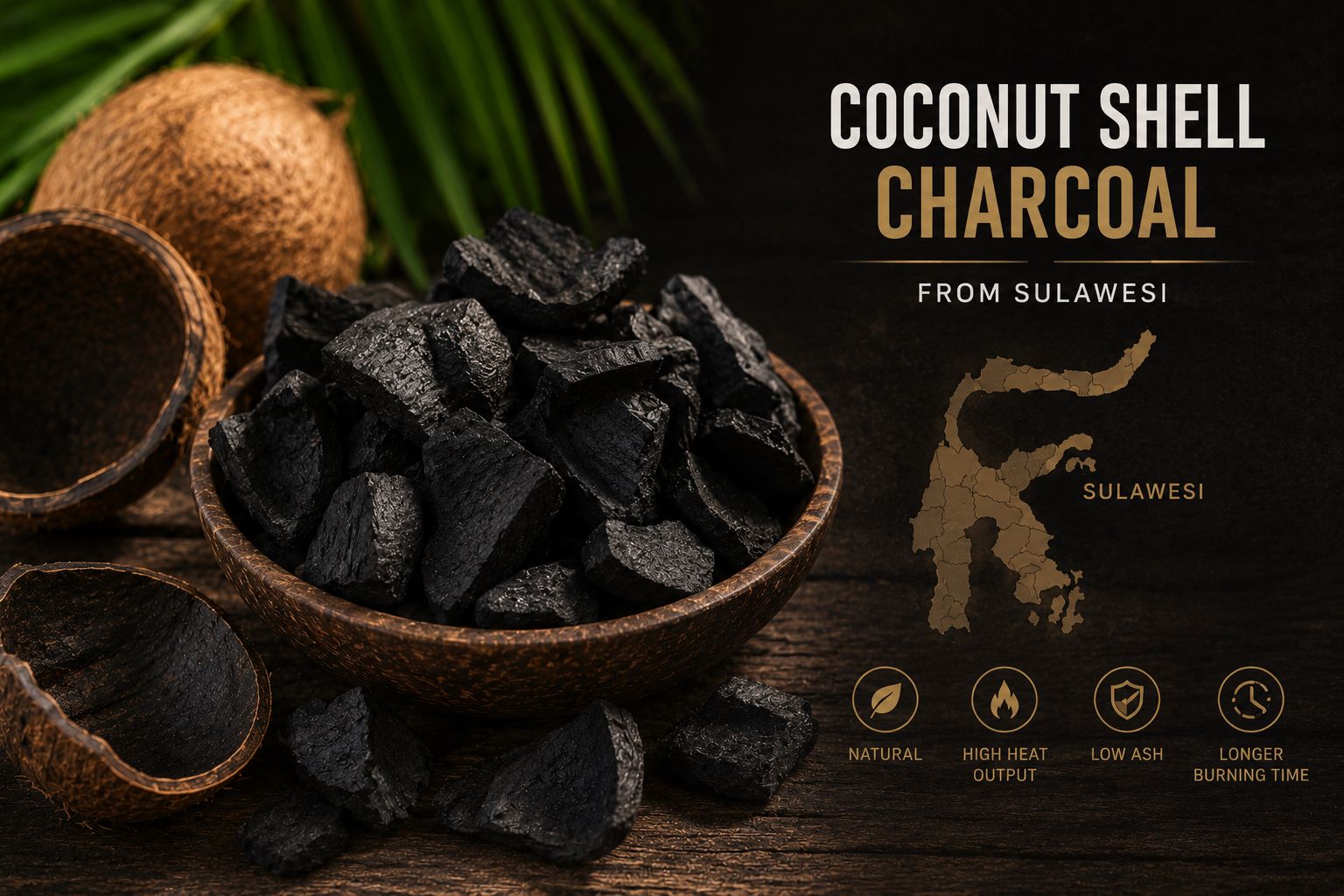
Sulawesi: Indonesia's Coconut Heartland
Indonesia is the world's largest coconut producer — and within Indonesia, Sulawesi stands out as one of the most prolific coconut-growing islands. Provinces like South Sulawesi, Southeast Sulawesi, and Central Sulawesi produce millions of coconuts annually, creating a consistent and abundant supply of high-quality coconut shells for the charcoal industry.
But it's not just about quantity. The type of coconut grown in Sulawesi's climate and soil conditions makes a genuine difference in charcoal quality.
What Makes Sulawesi Coconut Shells Special?
1. Thicker, Denser Shell Structure
Coconuts grown in Sulawesi's tropical climate tend to develop thicker and harder shells compared to those from other regions.
This higher shell density becomes a significant advantage during charcoal production because denser shells produce denser charcoal.
2. Higher Carbon Content
The natural composition of Sulawesi coconut shells yields charcoal with a fixed carbon content of 75-80% or higher. This is the critical metric that determines how hot and how long a briquette will burn. Higher carbon = better performance, plain and simple.
3. Low Moisture Absorption
Sulawesi shells have a naturally low moisture content at harvest, which reduces the energy needed during the carbonization process and results in a drier, more stable final product with a longer shelf life.
4. Minimal Impurities
The clean agricultural practices in Sulawesi's coconut farming regions mean shells arrive at processing facilities with fewer contaminants, leading to purer charcoal with lower ash and volatile matter content.
From Shell to Briquette: The Production Advantage
Sulawesi's geographic position also works in its favor logistically. Major charcoal processing facilities are located close to coconut-growing areas, minimizing raw material transport time and keeping shells fresh and dry before carbonization. Key production hubs include Makassar (South Sulawesi) and Kendari (Southeast Sulawesi), both with port access for efficient export.
Why Buyers Specifically Request Sulawesi-Origin Charcoal
Experienced importers, especially those supplying hookah cafes in the Middle East and BBQ brands in Europe, often specifically request Sulawesi-origin coconut shell charcoal. The reason is simple: batch-to-batch consistency. When the raw material comes from a well-defined geographic source with stable growing conditions, quality variance is minimal.
This traceability also supports sustainability and responsible sourcing narratives that increasingly matter to end consumers.
The Bottom Line
Sulawesi coconut shells aren't just a raw material, they're a competitive advantage. Their natural density, high carbon yield, and low impurity profile make them the preferred feedstock for manufacturers who want to produce world-class charcoal briquettes that command premium pricing in global markets.
Tags: Sulawesi coconut shell charcoal, premium charcoal briquettes, Indonesian coconut charcoal, hookah charcoal supplier, coconut shell carbon content, South Sulawesi charcoal export