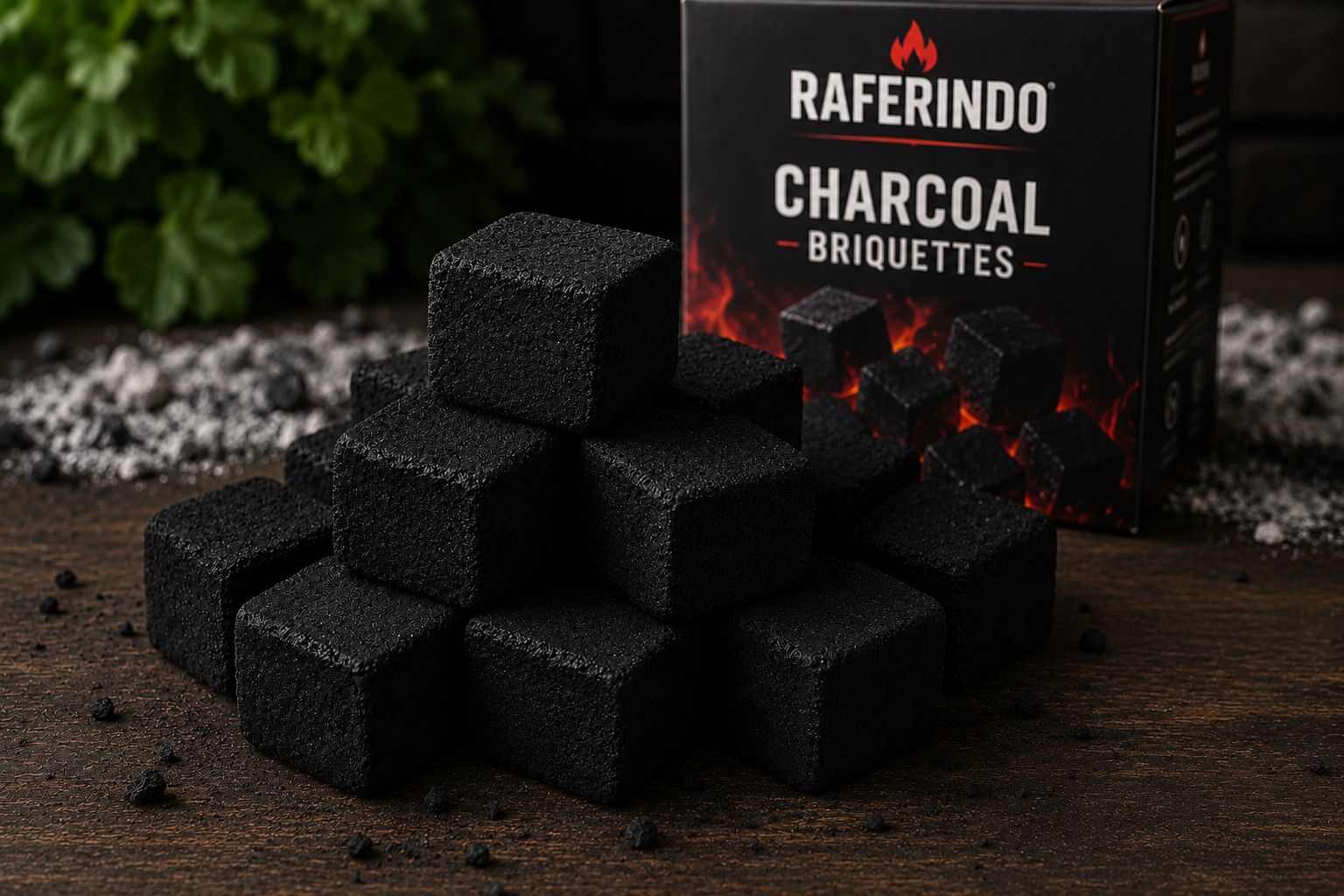
What Is Ash Content?
Ash content refers to the non-combustible residue left behind after charcoal burns. It's expressed as a percentage, and the lower, the better. Premium charcoal briquettes, particularly those made from coconut shells, typically have an ash content of ≤ 5%, compared to wood-based alternatives that can reach 10-15%.
Why It Matters
1. Cleaner, More Efficient Burn
Less ash means more of the briquette is pure carbon — the part that actually generates heat. A high-carbon, low-ash briquette burns hotter, longer, and more consistently.
2. Better for Shisha & BBQ
In hookah use, excess ash can fall into the tobacco bowl and ruin the session. For grilling, ash buildup restricts airflow inside the grill, causing temperature fluctuations. Low ash briquettes keep things running smoothly from start to finish.
3. Less Mess, Easier Cleanup
Nobody wants to spend more time cleaning than cooking. Low ash briquettes leave minimal residue, making post-session cleanup quick and hassle-free.
4. Better for the Environment
Less ash waste means less material going to landfill. It's a small but meaningful part of choosing a cleaner, more sustainable fuel source.
Indonesian Coconut Shell Briquettes: A Low-Ash Leader
Indonesia's coconut shell charcoal briquettes are globally recognized for their low ash content (≤ 5%), making them a preferred choice for shisha cafes, restaurants, and BBQ brands across Europe and the Middle East.
The natural density and purity of coconut shell feedstock is the key reason Indonesian briquettes consistently outperform competitors on this metric.
The Bottom Line
When sourcing charcoal briquettes, ash content isn't just a technical spec, it directly impacts performance, user experience, and value for money. Always ask your supplier for lab test results and prioritize briquettes with ash content below 5%.
Tags: low ash charcoal briquettes, coconut shell charcoal, hookah charcoal quality, BBQ briquettes, Indonesian charcoal, charcoal ash content